Effective Ministry Leaders are Solution-Focused

Hannibal leading his army through the Alps on elephants, dramatic snowy mountain pass, Carthaginian soldiers, towering war elephants, cold misty atmosphere, ancient historical scene

Hannibal was the brilliant Carthaginian general who famously led his army—including war elephants—across the Alps to invade Italy during the Second Punic War. When told it was impossible to successfully invade Italy from the north, he is quoted as saying, “I will either find a way or make one!”

The first leaders I interacted with were not generals but pastors. My dad was a pastor. His closest friends were pastors. I saw them communicating to large groups and caring for individuals behind the scenes. I listened to them discuss future direction and daily decisions. I observed them casting vision, raising funds, training staff, and overseeing construction projects.

Pastoring, leading a local congregation, may be one of the most complex leadership challenges imaginable. The vast majority of congregations have just one paid employee, the pastor. This means most of the work is done by volunteer staff. These same volunteers financially support the individual that they have invited to lead them.

All of this assumes a congregational expectation that the pastor is a leader. In some congregations, having a pastor act as a leader is neither expected nor accepted. These congregations much prefer their pastor to function as a chaplain more than as a leader.

Yet, the pastor must lead. No one else has the calling, training or time to focus on the breadth of the church’s ministry on a daily basis. All of the volunteers have expertise in something but none of them has 50 hours of time set aside each week to understand and process the strengths, weaknesses, opportunities and threats that form the congregation’s ministry context. The pastor must lead.

That does not mean the pastor is smarter than anyone else on the team or is always right just because she has a seminary degree. It does mean that the pastor cannot abdicate the ultimate responsibility for ensuring that the church accomplishes its God-given mission.

Any church that is serious about its mission will encounter problems. Even the church in the book of Acts experienced conflicts and challenges. Some of the best opportunities to develop as a leader come when the organization is faced with unforeseen difficulties.

Dr. Laurel Buckingham, my mentor and friend, captures the essence of this solution-focused leadership with this axiom: “As the leader, I am responsible for finding the solution to the problem, whether I caused the problem or inherited it.”

The leader who accepts responsibility avoids slipping into a “victim” mentality. Consider the other alternative. The leader who says “I am not responsible” is also saying “I am not the leader.” It is far better to accept more responsibility for the problem because in accepting that responsibility with I am accepting the opportunity to lead the team forward to finding the solution.

The best leaders are more concerned about fixing the problem than on fixing the blame. This pastor understands that finger pointing or playing “the blame game” is an unproductive use of emotional energy. Even if the 100% of the blame could be tracked down and laid at the feet of some individual, not one step of progress has been made toward resolving the problem.

This is not to deny that there is an appropriate time for post-op debriefing and clear-eyed evaluation. There is value in gleaning lessons for future improvement from the pain of our failures. But the wise leader avoids the trap of believing that finding a scapegoat is fixing a problem.

The key to this principle is accepting responsibility for finding a solution. Accepting responsibility is an incredibly empowering position. This perspective grants the leader the freedom to avoid being the blame detective and allows her to move into the creative zone of being a solution engineer.

The pastor exercises leadership by moving the team, starting with himself, from focusing on the problem to finding a solution. The leader energizes the team to get the facts, weigh the options, and agree upon the optimal solution. Then the leader mobilizes the team and points the way forward with bold and consistent action to implement the agreed-upon solution.

Effective pastors accept responsibility to lead their team in finding solutions to problems.
Lead Like Wesley

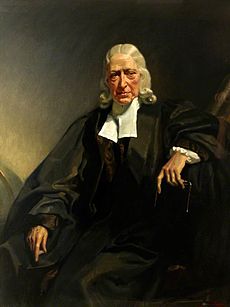
What values and behaviors did John Wesley expect of his leaders? How did those expectations shape the Methodist movement? John Wesley provided clear direction for his itinerant lay preachers through the “12 Rules of a Helper” that he first shared in 1744. This version of the rules is from John Telford’s The Life of John Wesley (Hodder & Stoughton, 1886), available online at the Wesley Center at Northwest Nazarene University.

1. Be diligent. Never be unemployed. Never be triflingly employed. Never while away time, nor spend more time at any place than is strictly necessary.

2. Be serious. Let your motto be, ‘Holiness to the Lord.’ Avoid all lightness, jesting, and foolish talking.

3. Converse sparingly and cautiously with women, particularly with young women.

4. Take no step towards marriage without solemn prayer to God and consulting with your brethren.

5. Believe evil of no one unless fully proved; take heed how you credit it. Put the best construction you can on everything. You know the judge is always sup­posed to be on the prisoner’s side.

6. Speak evil of no one, else your word, especially, would eat as doth a canker; keep your thoughts within your own breast till you come to the person concerned.

7. Tell every one what you think wrong in him, lovingly and plainly, and as soon as may be, else it will fester in your own heart. Make all haste to cast the fire out of your bosom.

8. Do not affect the gentleman. A preacher of the Gospel is the servant of alL

9. Be ashamed of nothing but sin; no, not of clean­ing your own shoes when necessary.

10. Be punctual. Do everything exactly at the time. And do not mend our rules, but keep them, and that for conscience’ sake.

11. You have nothing to do but to save souls. There­fore spend and be spent in this work. And go always, not only to those who want you, but to those who want you most.

12. Act in all things, not according to your own will, but as a son in the Gospel, and in union with your brethren. As such, it is your part to employ your time as our rules direct: partly in preaching and visiting from i house to house, partly in reading, meditation, and prayer. Above all, if you labour with us in our Lord’s vineyard, it is needful you should do that part of the work which the Conference shall advise, at those times and places which they shall judge most for His glory.

“Observe, it is not your business to preach so many times, and to take care merely of this or that Society, but to save as many souls as you can, to bring as many sinners as you possibly can to repentance, and, with all• your power, to build them up in that holiness without which they cannot see the Lord. And, remember, a Methodist preacher is to mind every point, great and small, in the Methodist discipline. Therefore you will need all the grace and sense you have, and to have all your wits about you.”

“Lead Like Wesley” is available on Amazon / Kindle:

The Most Important Meeting

Nominating CommitteeDr. David Drury, a friend from whom I’ve learned much, wrote a very helpful article a few weeks ago about the most important meeting of the year.  For churches, nonprofit boards, or other organizations that have elected leadership, there is a nominating committee meeting somewhere out there. Dr. Drury shared several reasons why this meeting is so vital. If you haven’t yet read his article, I encourage you to check this out: http://www.daviddrury.com/2015/04/09/the-most-important-meeting-of-your-year/

David makes the case that a well-designed nominating committee process is one of the best ways to set the future agenda, increase diversity in leadership, and protect the core values of the organization.

I enthusiastically agree with his conclusions. His article also caused me to reflect on my experiences with nominating committees. This issue of protecting the core values was one of the criteria that I have prioritized in the past. As I prepare to move into a new leadership role this summer, I will be working even harder to ensure that this is true.

Of special interest, as one returning to the role of District Superintendent, “What criteria do I look for when we are nominating members of a District Board of Administration?”

Before I share my top 3 list, let me add the caveat that I am assuming that each of these potential nominees are Spirit-filled members of The Wesleyan Church in full agreement with our doctrinal statements and lifestyle commitments (and I do know that might make my list of candidates shorter than I wish that it was). So, with that in mind, here’s my top three:

1) Do they model what we say is important as a district?

I won’t neglect the importance of a wide-range of voices, from different age groups, church sizes/styles, and making sure that both women and minorities are well-represented.  But I will not sacrifice the mission for the sake of a photo-op or achieving some quota. The sad reality is that most of our boards are too white, too male and too old. And, yes, I fall into all three of those boxes.

But more important than diversity is unity of purpose. If the district as a whole is going to be committed to the Great Commission and making disciples, then every nominee needs to model that in their respective context.  If a prospective nominee would represent a church that is not making disciples, at least as quantified by 1) professions of faith, 2) believer baptisms, 3) members added by profession of faith, and 4) a resulting increase in the worshipping community, it is not fair to that individual, or the district, to nominate them to a position where they will be asked to set policies and provide accountability to the other churches in the region.

Unfortunately, as Dr. Drury notes, too often nominating committees present a slate of candidates that look very much like those of the previous decade without regard to whether the nominees best represent the vision and values of the team.

2) Do they fully support the team they’re calling others to support?

My second expectation is that these nominees represent congregations that are fully cooperating in the unified ministry of the district. I am not looking for Lone Rangers. Districts were created to serve a region of local churches who organized themselves in this structure to do some things better together than they could do alone.

Local churches send the delegates that elect district officers and set district policies. Local church delegates establish the portion of financial support (District Stewardship Fund) that each church will contribute.

Anyone nominated to a position that decides how the combined ministry funds of the district should be spent, has the right to come representing a church that fully participates. In other words, it is unfair to place any individual in the awkward position of having to explain why other churches should fully participate in USF when the church they represent doesn’t.

That seems like a very basic expectation but I’ve had conversations in the past with DBA members who never thought about those implications and had never been questioned about it. If I was somehow nominated to a district office but my church had not paid 100% USF in the previous year, I would respectfully decline.

I found the same situation to be true when I interacted with members of the Board of Trustees at a Christian college. They were elected and empowered to approve plans to spend the donations of other faithful contributors, but they themselves had given nothing in recent years.

I encountered the same challenge in local churches where members of the elders, deacons, or board of directors were not giving at the minimum expectation level of tithing. (Wesleyan Discipline 460-475).

We have little right to expect God to financially bless an organization or ministry that is led by people are not surrendered to this minimum standard of investment. Where your treasure is, your heart will also be.  And if your treasure is not here in this ministry, where is your heart?

The same goes for church planting. If we say church planting is one of our highest priorities as a district, do our nominees come from churches that have expressed that commitment in practical ways like praying, sending, and giving?

What about world missions? Caring for the poor and marginalized?  If these are priorities in our district, to what degree does our list of nominees represent churches that are uniting as a team to make a difference in our region?

3) Do these nominees represent the widest possible spectrum of voices from our team?

Once these first two criteria are satisfied, then I love to see a nominating committee do the important work of building a slate to make sure all voices are heard at the table.

The Wesleyan Church, of which I am gladly a member, holds out the hope of full participation for women in ministry. Yet, only one woman serves as a District Superintendent (Rev. Anita Eastlack serves as Co-DS with Dr. Karl Eastlack in Penn-Jersey District) and only one of our largest 100 churches is pastored by a woman (Rev. Heather Semple at Red Cedar Community Church in Rice Lake, Wisconsin).  If we’re serious about equal opportunities, surely the nominating committee is the gateway to ensuring that promise.

If it were not for the rapid increase in Hispanic congregations, The Wesleyan Church in North America would be showing a net loss in the number of local churches. Yet, how many pastors or lay leaders of Hispanic congregations serve on the District Board of Administration?

Leaders from ethnic and multi-ethnic congregations have a valued voice that must be heard if we are going to be effective in reaching our communities for Christ. The nominating committee must be proactive in opening that door to more diverse representation.

Then there are age considerations. Not just the age of the nominees, although I would observe that the average age of most district boards is two, or even three, decades older than the average age in our congregations. I am also thinking about the age of the church itself. Often, the long-established congregations are disproportionately represented in district boards and committees.

If a district team is going to be serious about launching many new congregations, then there need to be leaders at the table from those new congregations. The challenges they face (i.e. dealing with temporary facilities and attenders who have little or no sense of denominational connection), are realities that need to be in view as the district leadership team makes decisions about the future.

That’s my short list of expectations for nominees to the DBA. What makes your list?

“To Close or Not to Close?”

Old church

That’s the question a colleague asked me this week. What are the factors that should be considered when a district is faced with the decision of whether or not to close a church. This was not a rhetorical question. As a district superintendent in The Wesleyan Church, first in Wisconsin and then in West Michigan, I worked through this with local leadership teams and district boards more than once.

I wrote these notes for him and will take some risks sharing them here for your feedback. The first risk is that I already know my list is not complete. There are likely other and better factors than I have offered.  The second risk is that even some of the items I’ve listed here are wide open to interpretation and there will be plenty of territory for people of  good will to disagree.  I’d love to hear back from you and really want to learn how I can be more helpful in such a consequential decision.

I also have to acknowledge the real possibility that I played an official role in calling out the time of death when one more jolt of electricity might have revived what seemed to be a lifeless corpse. On the other hand, my experience has been that most churches have resisted intervention so long that they missed a window of opportunity when that same decision could have been made more redemptively, with less emotional and spiritual trauma.

One thing I concluded from my experience is this: districts don’t close churches. Churches close themselves. Churches close themselves not just in that final vote but in several years of decisions that turned the church more and more inwardly, away from the mission of God.

In such cases, the district leadership team is like the doctor in the ER who finally calls out the time of death to be written down in the medical records. But the patient is usually on the table for a long time with feverish effort from the attending staff before that final call is made.

And any such decision should be soaked in prayer, lots of prayer.  Prayer by the congregation and their leaders. Prayer by the district team that is accountable for the final decision. PRAY!

Now, with that brief introduction to a very complicated discussion, allow me to offer these 10 points for consideration:

1) Is the Kingdom of God better advanced by this church remaining open even if attendance and financial solvency are at an all-time low? Are people still coming to Christ, being baptized and discipled, growing in their faith and service to God, even though the overall attendance and financial solvency are trending negatively?

2) Is the church bringing a reproach to the name of Christ? Are there spiritual, doctrinal, moral, financial or legal issues that are unresolved after multiple approaches?  Are unreached/unchurched people in this community more or less likely to have confidence in and respect for the work of God if this church stays open?

3) As fewer people are left to carry the load, is the spiritual well-being of faithful members being drained by the spiritual, emotional and financial toll of trying to sustain this declining congregation?

4) Is the internal dynamic of the congregation toxic for pastors? Can I in good conscience appoint another pastor to serve this congregation? Would I appoint my brother or son to pastor here?

5) Are there external factors in the community (a rural community with declining population, etc.) that have disproportionately impacted this congregation and are not likely to change in the next few years?

6) Is this congregation diverting resources (time, money, energy) of the district away from serving congregations who are or could be generating a better return on those investments?

7) If we didn’t already have this congregation in this location, does the surrounding community have enough potential that we would be drawn to plant a new church here in the next few years? If not, what does that lack of potential, as we assess it, say about the likelihood that this congregation can be revitalized?

8) If this ministry wasn’t already here and we would likely plant a new church in this location, is this existing congregation blocking or fighting that possibility?

9) If we would plant a new church in this location, is the value of the property and land (for which we have to give an account as stewards) better leveraged to launch that new ministry than to preserve the existing one?

10) Are there other healthy evangelical churches in the vicinity that these members could attend, if this congregation was closed, or is this the only viable option for them to worship and serve?

These are some of the factors I’ve prayerfully considered when faced with this question. What considerations would you add?

Leaders Finish With Their Team

Prez at KU 5K“The best athletes cross the finish line first. The best leaders cross the finish line with their team.”

Five kilometers can’t be that hard. At least that’s what I was thinking before the race began.

The morning sky was clear blue. The sun was shining, warming the runners who gathered in front of Nicholson Hall to participate in the first Kingswood University 5K.

I arrived early enough to snag the coveted number #001 although I held no illusions that the number would in any way be prophetic of my time or ranking.

A small but hardy band of aspiring athletes assembled to hear directions, to stretch muscles, and to enjoy the camaraderie of the event. An enthusiastic team of volunteers served them with smiles. There were about as many volunteers as there were runners. Coach Kirk Sabine was directing traffic and Professor Brent Dongell’s contagious enthusiasm was inspiring the runners.

Just before the race, I was asked, as a gesture of formality, to offer a prayer for the event and the participants. The words of Isaiah 40:29-31 came to mind so I prayed that “those who run will not grow weary and those of us who walk will not faint.” And I meant it. The last thing I needed was to fall over from heat prostration. That would embarrass me and frighten my running partners!

With an appropriate countdown and a valiant but feeble attempt to vocally imitate a starter’s pistol, the race began and the contestants were off and running or jogging or walking. I started out with a gentle jog not wanting to fall too far behind but before long there were three of us together trailing the field.

It wasn’t too much further along, maybe about the 1k mark, that my lungs suggested to my legs that it was time for them to stop showing off. My gentle jog became a walk. This was moderately brisk walk to be sure, but my pace was definitely short of anything resembling running. Every so often I would gather myself with a short burst of energy and catch the runners ahead of me. But they seemed to be getting stronger as the race went on.

Along the race route, the volunteer staff shouted their encouragement and the amused vehicle operators waved us on at the road crossings. I was quite relieved to see the halfway mark and it was refreshing to be greeted by the effervescent Mireille Bastarache. Then I faced the reality that I still had to make it all the way back … only now on legs of rubber.

By now you have clued in to the fact that I was really out of shape. But, since I survived long enough to write this post so you know the race didn’t kill me.

The best part of the race for me was when the two freshmen who tied for first place, and set the course record (this being the inaugural race), came back out on the course to meet the old president. They ran alongside and spurred me on to a final burst of speed (speed being a relative concept). With that blindingly fast last 50-meter sprint, I crossed the finish line in just under 36 minutes.

Then, without hesitating, Mike and Luke ran back down the course and did the same for the last runner in the race.

Their generosity and encouragement reminded me of this principle: the best athlete may cross the finish line first but the best leaders cross the finish line with their team.

Mike and Luke demonstrated their potential for great leadership that day!

Prez finishes KU 5KMy prayers were answered. Yes, sometimes I could only walk, but I  did not faint. Now, maybe next time I can run and not grow weary.
One more thing. Remember my number #001. Well, if this 5k race had a grouping for people over 50, I was definitely #1 in my age category.

If you look for it, you can always find something positive, even when you’re exhausted!

Reflect: As a leader, are you far enough ahead that your team is following, but close enough that they’re not feeling left behind or discouraged?

Don’t Let Frostbite Stop You

He did it!

Ice SkatesLast night, at age 19, our son J.J. played in his first competitive ice hockey game. Now you may think that’s not a very impressive accomplishment for someone his age living in Canada, but there’s a backstory here.

I was raised in Canada playing hockey on frozen ponds and makeshift rinks in our neighborhood. Later, I played on my high school team and eventually participated on the team here at Kingswood University for two years before transferring to complete my undergraduate degree at Southern Wesleyan University in South Carolina. You will not be surprised to learn that SWU did not have an ice hockey team. Except for one freak storm in my senior year, they didn’t have ice…except to put in their sweet tea! 

Now, here we are back in Canada 37 years after I played my last game at Kingswood. I’m blessed with 3 wonderful sons and all of them have enjoyed learning to ice skate since we moved to Sussex, New Brunswick. John, our oldest son, had a late start but really improved over his time here at Kingswood. As much as he wanted to, John never quite got the hang of stopping quickly on skates. That is important to ensure sure that you do not unintentionally injure yourself or others when you’re playing the game.

Back to JJ. The local arena offers free ice skating over the noon hour so JJ began skipping lunch and practicing every time he could. He learned to skate forward. He eventually even learned to skate backward. But, no matter how hard he tried, he was frustrated for two years trying to learn to do the hard stop. Friends and father alike offered suggestions. He kept trying. Still, no success.

This year, during the Christmas break from classes, JJ had more time to practice his skating. He went every time there were free sessions at the arena. He was so determined that he even ended up with frostbite. That wasn’t in the arena but on a frozen pond in the fields behind the college. The temperature was well below freezing, but he would not be denied. He worked on stopping over and over again. He fell, got back up and tried again. His gloves were designed for winter wear but were not intended to keep fingers warm for hours in subzero temperatures.

But I’ll never forget the look on his face the day he told me that he’d finally figured out how to do the hard stop. He was triumphant. He was exuberant. Yes, we did have to help him care for his fingers and make certain that the frostbite didn’t cause permanent damage.

His determination and sacrifice had finally paid off.

He still had to do a tryout with the hockey coach to demonstrate his proficiency. The tryout was a success and he was given the green light to suit up for his first hockey game last night. He certainly wasn’t the fastest skater on the ice and he didn’t score a goal, but I couldn’t be any prouder of him.

I am more proud of his effort than his accomplishment. Even if JJ had never mastered the skill of the hard stop, his determination and perseverance were building something deeper in his character that will serve him well as he moves into leadership challenges after graduation.

Perhaps the skill that you are trying to develop won’t require you to endure frostbite, However, for every meaningful accomplishment, there is a price to be paid. Don’t give up. Push yourself a little further. Stay in the race a little longer. You are becoming strong and better in the process.

John Wooden, Hall of Fame basketball coach of the UCLA Bruins, wrote:

“When you improve a little each day, eventually big things occur…. Not tomorrow, not the next day, but eventually a big gain is made. Don’t look for the big, quick improvement. Seek the small improvement one day at a time. That’s the only way it happens — and when it happens, it lasts.” – John Wooden

On that scale, JJ was a success.

And who knows, before he graduates JJ may just score that game-winning goal!

Church Membership – Time for Another Wesleyan Conversation?

Like many denominations, my own denominational family (The Wesleyan Church) has had numerous conversations through the years about how we should approach the question of membership.

How do we define membership? What is its purpose?Old_Church

What is the best way to implement it?

Do we raise or lower the bar? Do we open the door wider or close it tighter?

With a millennial generation that does not seem to value institutional membership, do our answers to these questions even matter?

My reading plan this year includes re-reading some books that I’ve found meaningful in the past and want to revisit as I prepare to transition from leading a college back to coaching and consulting with congregations.

One of those books is “Leading Beyond the Walls” by Dr. Adam Hamilton, church planter/lead pastor at United Methodist Church of the Resurrection (COR) in Kansas City. First published in 2002, the book was written when COR was averaging close to 5,000. COR averages more than 7,000 today on the main campus and another 2,000 on regional campuses.

In light of our membership conversations in my home denomination, I was especially interested to learn how Church of the Resurrection approaches membership in their growing congregation.

Hamilton owns the reality that “the loyalty pledge to a denomination is difficult for those under forty to relate to or with integrity to accept.” (p.58) He developed an approach to membership that “lowered the threshold to make it easy for people to join our church, while simultaneously raising the bar of expectations for membership.” (p.50)

This is consistent with their view of membership “as a tool that we think best functions as a step toward true Christian commitment…it signifies a growing desire to identify themselves as Christians and to express commitment to the church.”

Hamilton sees this model clearly aligned the New Testament. He refers to Jesus’ simple invitation “come and follow me.” That was followed by 3 years of intensive discipleship but it began with a positive response to the invitation to join Christ on a journey of learning and obedience.

Hamilton also uses the illustration of Peter’s invitation on the Day of Pentecost to “repent and be baptized.” Acts 2:41 records that three thousand responded and were “added to their number.” That comes close to suggesting that the membership roll was comprised of all those who were willing to publicly express their faith in Christ, receive baptism as that visible sign, and align themselves in ongoing fellowship (as depicted in Acts 2:42-45).

Consistent with that perspective, Church of the Resurrection only asks prospective members two questions (p.58):

  • Do you wish to be a disciple and follower of Jesus Christ?
  • Will you make this your church family, allowing the people of this church to love and care for you, as together we serve God with our prayers, presence, gifts, and service?

Perhaps this seems too easy. However, Hamilton presses on to make it clear “that unlike the American Express Card, membership in our church has no privileges, only expectations.” (p.59)

In their experience, people want their membership to be more meaningful. This orientation toward membership being about responsibilities rather than rights, “makes it all the more compelling.” (p.59)

All members at COR are expected to demonstrate their commitment by: 1) attending worship each weekend (unless sick or traveling out of town), 2) participating in a growth experience in a class or small group, 3) serving at least once each year in the ministries of the church, and 4) financially supporting the church with the goal of tithing. The church not only expects but also inspects to see how the membership is responding to these growth opportunities. At the time of this writing, attendance averaged between 90 and 110% of membership, participation in classes/small groups was 45% of membership, serving at least once each year involved more than 80% of their members, and giving was increasing faster than the growth rate of membership.

For many in my home denomination, this would be a marked departure from our current prescribed model of membership. Honestly, I would not be surprised that this is how a number of our growing churches are actually implementing membership in their ministry context.

One of my friends recently described our model of membership as “a reward for discipleship rather than a door to discipleship.” Is our current model a response to the requirements of creating a reform or protest movement within a majority-Christian context of the 1800s? Was membership then more about creating behavioral identity markers to separate us from other denominational entities? If that was the origin, does it continue to be our purpose?

General Conference 2016 will allow us one more opportunity to have this important conversation.

Here are some of the questions I am asking as we move toward this discussion:

  • If we were beginning The Wesleyan Church from scratch as a new missionary movement to reach post-Christian America, what model of membership would we create to help us be most effective as we sought to fulfill the Great Commission in the Spirit of the Great Commandment?
  • What model of membership is most consistent with our passion to spread hope and holiness that transforms lives, churches and communities?
  • In the Church that Jesus is building, is it most helpful when local church membership is held out as a reward for discipleship or should it be the door to discipleship?
  • What membership framework will be most helpful in not only retaining our own next generation (including my children), but in giving them the best opportunity to effectively reach and impact their world for Christ?
  • Will The Wesleyan Church, that has meant so much to me, continue to be relevant to them as they launch out on their journey of discipleship and ministry?

Do find these questions compelling? Do you think the answers matter?

I do and I am confident that the leaders of The Wesleyan Church will guide our conversation toward a solution that ensures the maximum possible impact of our Kingdom influence.

New Year – New Opportunities

I have to confess that I like new things. Maybe that’s why New Year’s Day may be one of my favorite days of the year. A new adventure. A new destination. Even a fresh new page in a brand new journal!

I realize that New Year’s Day is not exactly a holiday (holy day), except for college football fans. But this day does seem spiritually significant.

Like many of you, I take several hours on the days leading up to January 1, to reflect on the past year and project into the year ahead. My reflections include highlights of the past year. I think back over victories and disappointments. Mistakes made. Lessons learned. Friendships formed. Chapters closed. Doors opened.

One of the biggest changes has been in our family life. The countdown to launch is on with our kids. Our four children are wonderful and it looks like we’ve survived the teenage years without major catastrophe. They really are amazing young people. We’ve thoroughly enjoyed growing up with them!

John and Lindsey were married just over a year ago and are thriving in pastoral ministry serving on staff at Stoney Creek Church.

Josiah is months away from graduation with only 2 more classes and his internship in student teaching left this semester. He stays busy filling in to lead worship at several churches in the area. I’m excited to see where God leads him in the fall.

Joel is a junior this year and serves as president of the student council at Kingswood University. He is also member of the inaugural Buckingham Leadership Institute Scholars, a monthly mentoring experience with Dr. Laurel Buckingham.

Jordan, our 17-year-old, is always a delight to us and is enjoying her freshman year at Kingswood. This New Year’s Day finds her serving in Haiti with Dean Stephenson’s Catons Island counselor team.

But this fall, Sherry and I are likely to be empty-nesters, unless Jordan takes pity on us and follows us to a destination yet unknown. That will be a big change. Sherry has always enjoyed serving clients in her accounting and tax practice, but has been careful to not let it come ahead of our children. For the next few years, at least until grandchildren start arriving, she is looking forward to developing her practice more broadly. Whatever she does, it will be with excellence and contagious enthusiasm.

And then there’s me. I turned 55 this past year. Trusting God for favor and health, I’d like to be as energetic and enthusiastic at 75 as is Dr. Laurel Buckingham, my friend and mentor. If that’s the case, I am just beginning what I believe will be the most productive 20 years of my life.

I have been incredibly blessed to serve the church in a variety of capacities: youth and music leader (North Carolina and Alabama), church planter (Mississippi), pastor (North Dakota and Azerbaijan), district superintendent (Wisconsin, Michigan), and now as a college president.

The past 5 years at Kingswood University have been amazing. I’ve learned so much. I’ve worked with a dedicated team. I’ve met wonderful people. I’ve been blessed to see God work in miraculous ways. But I really did sense last year that this chapter was closing. My goal is always to leave a place better than I found it. I believe, with the help of God, I have accomplished that assignment.

And bright days are ahead for Kingswood. I am confident that the new president will hit the ground running with vision and passion that will take KU to even greater levels of impact in preparing workers for the Harvest.

Some friends have asked what I’m planning to do after leaving Kingswood. The honest answer is that I don’t know yet. I do know I’ll be more engaged in coaching and consulting, especially with leaders in local churches. And there’s a writing project that’s been calling my name. But if you have room on your prayer list for one more request, we would be grateful for you to pray that Sherry and I will clearly know and follow God’s will for this new chapter.

Whatever door God chooses to lead us through, He is so good and faithful that I am confident that He will make a way, even through the wilderness. And, I fully expect to find streams in the desert!

May God crown you with His blessing and favor in all 8,760 hours of this new year as you pursue Him!

“Forget the former things;
    do not dwell on the past.
See, I am doing a new thing!
    Now it springs up; do you not perceive it?
I am making a way in the wilderness
    and streams in the wasteland.”  Isaiah 43:18-19 (NIV)

3M Leadership

3M Corporation is one of the best-known brands and best-run companies in North America. Founded in 1902 as the Minnesota Mining and Manufacturing Company, the business almost failed during its first 14 years but it finally became financially stable in 1916. Today, with products that include household names like “Scotch tape” and “Post-It Notes,” 3M worldwide has more than 80,000 employees and $30 billion in revenues and is one of America’s more respected corporations.

3M may be best known for its deeply held value of innovation. Last year, 32 percent of their total revenue came from sales of products developed in the last 5 years. Inge Thulin, recently promoted from COO to CEO, said that they are tracking to have 40% of their profits generated by new products by 2016. (http://www.startribune.com/business/138927874.html)

So how does that apply to leadership in the church? I propose that every church that hopes to flourish should aspire to becoming a 3M church.

No, I’m not proposing that churches should move into mining or manufacturing. However, I am convinced that the greatest source of future growth in the church will come from developing and empowering new leaders. And the secret to multiplying new leaders is mentoring.

The most frequently asked question about leadership is “Are leaders born or made?” The answer of course is that all leaders are born. As John Maxwell jokes “I wouldn’t want to meet an unborn leader.” For leaders to achieve their maximum effectiveness, they must learn to lead. And the best way to learn to lead is by actually leading something with the counsel and coaching of an experienced mentor.

A 3M church is committed to the principle that “Mentoring Multiplies Ministry.”

Whether the church employs a “fractal structure” as advocated for by Wayne Cordeiro (“Doing Church as a Team”) or the “cell-church” strategy modeled by Yyongi Cho at the world’s largest congregation, every healthy church has to figure out a way to multiply leaders.

I was privileged to sit with Mike Hilson (lead pastor for La Plate – New Life Wesleyan Church) last week. Mike talked about the requirement they have for every leader in their church to pick some people to mentor and then teach them to do the same for others.

Pastor Mike used the example of their children’s ministry. Of the 2800 people who call New Life their home church, more than 300 volunteer to serve the children. That high of a ratio of volunteers in children ministry (10% of attendance) wouldn’t be achievable unless the teams of leaders for every department and age group were intentionally investing in others.

I’m note sure if Mike said it or I just heard it, but what I wrote in my notes that day was “Multiplication Matters Most.” Reflecting on that conversation now a week later, I would summarize it this way: “Mentoring Multiplies Ministry.”

There really are only two ways to get more done in the ministry to which Christ has called you: 1) work harder and smarter yourself or 2) invest in other people who will mentor others to serve with you.

There is an African proverb that says, “You can go faster alone, but you can go further together.”

Will it be slower in the beginning to take the time to train and develop other leaders? Yes. A one-time event can be “microwaved” with a crowd of volunteers who simply follow directions. An enduring ministry requires a “crockpot” approach of mentoring toward multiplication that marinades the vision, values, and practices of the culture deeply into the next generation of leaders.

Is it worth it? Yes. Not only will you become a better leader by teaching and mentoring others, you will exponentially increase the capacity of your team for Kingdom impact. If you can accomplish your vision alone, dream bigger!

If you want to go further as a congregation, embed this 3M principle in the DNA of your church or organization: “Mentoring Multiplies Ministry.”

“Do Stuff”

Rev. Mike Hilson (Lead Pastor at New Life-La Plata) and Chris Waggoner (New Life’s executive pastor) presented at the Eastern New York – New England District pastors conference this week. In the Tuesday morning session, Chris took the platform to share helpful insights from his years of leadership with staff and volunteers.

In addition to a long and strong list of ways to affirm and develop your team, Chris challenged the pastors to “stop chasing what God is not blessing.” Chris made the point that often we don’t have the staff or resources to do the new thing that God is blessing because we’re unwilling to let go of programs or activities that were once useful but have ceased to be effective.

As Chris was wrapping up his presentation, Mike Hilson (Lead Pastor at New Life) jumped in to remind us of the power of building a team to accomplish more together than we could alone. His humorous way of explaining this began with “Do stuff.”

This is where every leader starts. Whether it’s creating a big event or hospital visitation, every pastor does stuff. However, until the leader is willing to recruit, train and empower other people do to the stuff that he or she has been doing, the bottleneck to the growth of ministry is the pastor.

When the pastor moves to the next level, more people can use their gifts and abilities to multiply the ministry. Not only does more get done and more needs get met but each new person involved in “doing stuff” develops a greater sense of belonging and ownership of the ministry. In this next level of leadership, the pastor has to function as a manager/mentor of people who “do stuff.”

The next step of building this ministry base is becoming a leader/mentor of the manager/mentors of people who “do stuff.” As the ministry grows, the pastor must become a leader of leaders. When a church is ministering to 1000 or more, the pastor is the vision provider for leaders of leaders of managers of people who “do stuff.”

Mike’s outline of changing role of the leader in a growing organization reminded me of the Apostle Paul’s directions to the growing church in Ephesus (Ephesians 4:11-13). The equipping/teaching ministries are to prepare God’s people to “do stuff.”

Steve Murrell, author of “WikiChurch” and pastor of Victory Church in Manila, describes this as “mentors-ministers-maturity.” Only when the equippers/teachers mentor the saints to be effective in their ministry can the whole body move to maturity.

Steve argues that this usually breaks down in churches because the people, and some pastors, think they have to be as mature as the pastor before they begin to minister. The result, in Steve’s words, are churches full of “overworked pastors, overfed members and unengaged communities.”

Ministry is one of the most direct paths to maturity. The ministry leader serves best by recruiting, training and empowering people to “do stuff.” Then, as more and more people are released to “do stuff,” the pastor grows into a leader of leaders of managers of people who are ministering to a wider range of needs and greater number of people than the pastor could ever have served alone.

My responsibility as a leader is not to just “do stuff” but to create systems and opportunities to ensure that a growing and maturing body of believers get to “do stuff.”