Microsoft Innovations: Empowering the Mobile Experience

Microsoft is a global technology leader, constantly driving innovation and transforming the digital landscape. With cutting-edge mobile applications and cloud solutions, the company enables users to work, learn, and enjoy entertainment wherever they are.

Innovative Solutions for Business and Personal Use

Products such as Office 365 and the Azure platform have revolutionized the way both businesses and individuals operate. Microsoft’s mobile solutions provide seamless access to essential tools, ensuring productivity and connectivity on the go.

Security and Reliability

Security remains a top priority for Microsoft. Regular updates and advanced protection technologies guarantee that users’ data stays secure, whether they’re managing business tasks or accessing personal information.

Discover More

Committed to making technology accessible for everyone, Microsoft continues to innovate and grow. To explore the latest developments and learn more about their diverse range of products, visit the official website at Microsoft.

LEAD LIKE WESLEY – Christmas Gifts!

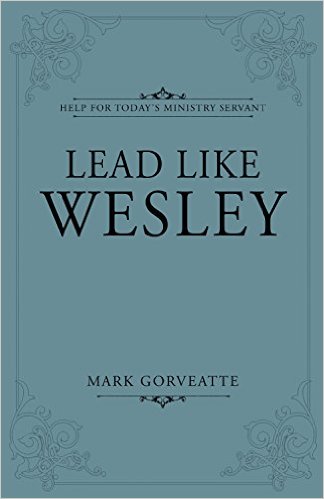
As you’re making your Christmas list, Amazon still has copies of “Lead Like Wesley” and they’re beginning to offer discounted prices as we head into the holidays.

Lead Like Wesley book coverHere’s what Mark Wilson, professor at Southern Wesleyan University and author of Purple Fish, said about this book:

“If you lead anyone, you need this book. Blending the best of contemporary leadership skills, rich wisdom from personal experiences, and timeless truth from the iconic founder of Methodism, Lead Like Wesley shares the essence of great influence.”

Dr. Benji Kelley, founder and lead pastor of newhope Church in North Carolina, offered this positive recommendation:

“Gorveatte has masterfully culled powerful truths of ministry leadership from one of the great ministry geniuses in history and connected them to our church and community realities today. Learn to lead from the well-earned wisdom of Wesley.”

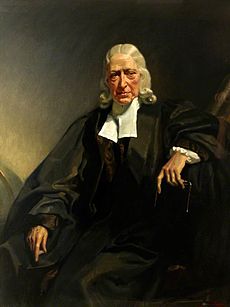
John Wesley portraitJohn Wesley’s track record of leadership development is incredible. Imagine directing a staff of more than 500 in multi-site ministry without email and cell phones. It was these very leadership principles that held together worldwide movement (more than 50 million strong). Contemporary research confirms the validity of Wesley’s leadership insights. Methodists and Wesleyans now have a lay leadership development resource that is firmly grounded in our own story. (Lead Like Wesley)

Royalties from the book have all been donated to train third world ministry leaders through Global Partners and Kingswood University.

I’d love to hear how you’ve found the book helpful personally and as you’ve used it in developing other leaders.


Believing in you,

Mark Gorveatte

P.S. I’d be grateful if you’d share this link on your page: Lead Like Wesley

“Lead Like Wesley” ebook released on Amazon!

As you’re making your Christmas list, Amazon still has copies of “Lead Like Wesley

Lead Like Wesley book cover Here’s what Mark Wilson, professor at Southern Wesleyan University and author of Purple Fish, said about this book:

“If you lead anyone, you need this book. Blending the best of contemporary leadership skills, rich wisdom from personal experiences, and timeless truth from the iconic founder of Methodism, Lead Like Wesley shares the essence of great influence.”

Dr. Benji Kelley, founder and lead pastor of newhope Church in North Carolina, offered this positive recommendation:

“Gorveatte has masterfully culled powerful truths of ministry leadership from one of the great ministry geniuses in history and connected them to our church and community realities today. Learn to lead from the well-earned wisdom of Wesley.”

John Wesley portraitJohn Wesley’s track record of leadership development is incredible. Imagine directing a staff of more than 500 in multi-site ministry without email and cell phones. It was these very leadership principles that held together worldwide movement (more than 50 million strong). Contemporary research confirms the validity of Wesley’s leadership insights. Methodists and Wesleyans now have a lay leadership development resource that is firmly grounded in our own story. (Lead Like Wesley)

Royalties from the book have all been donated to train third world ministry leaders through Global Partners and Kingswood University.

I’d love to hear how you’ve found the book helpful personally and as you’ve used it in developing other leaders.


Believing in you,

Mark Gorveatte

P.S. I’d be grateful if you’d share this link on your page: Lead Like Wesley

Help Launch a New Book on John Wesley’s Leadership Secrets

Lead Like Wesley

I need your help.

Here’s what’s happening. Wesley Press is releasing a new book in just a fewLead Like Wesley book cover weeks called: “Lead Like Wesley

One reason I’m excited about it is that I wrote it. Crossed it off the bucket list and, hopefully, made my dad and mother proud. While that may be a good enough reason to write it, it’s not a good enough reason for you to buy it!

The truth is, I really do think leaders are going to find this helpful. Not just for themselves but also for the leaders they are developing. John Wesley’s track record of leadership development is remarkable. These principles were the tendon and sinew of what it now a worldwide movement (more than 50 million strong).

Contemporary research validates the impact of these leadership insights. So I’m excited about Methodists and Wesleyans having a leadership development resource that is grounded in our own story. (Lead Like Wesley)

Third, I’m not taking any royalties. Seriously, Sherry and I have been blessed and want this book to be a blessing. We donated the advance to the International Leadership Development project with Global Partners (the missions agency of The Wesleyan Church). And every dollar that comes in after the advance is paid off will go to Kingswood University’s scholarship fund to provide financial aid for international ministry students.

So, buy it for yourself. Buy it for a friend or leader that you’re mentoring. Buy it to help train a third-world ministry leader. Or, buy it to help me thank my mother and father for investing in me. Thank you, my friend!

Believing in you,

Mark Gorveatte

P.S. I’d be grateful if you’d share this link on your page: Lead Like Wesley


The Most Important Meeting

Nominating CommitteeDr. David Drury, a friend from whom I’ve learned much, wrote a very helpful article a few weeks ago about the most important meeting of the year.  For churches, nonprofit boards, or other organizations that have elected leadership, there is a nominating committee meeting somewhere out there. Dr. Drury shared several reasons why this meeting is so vital. If you haven’t yet read his article, I encourage you to check this out: http://www.daviddrury.com/2015/04/09/the-most-important-meeting-of-your-year/

David makes the case that a well-designed nominating committee process is one of the best ways to set the future agenda, increase diversity in leadership, and protect the core values of the organization.

I enthusiastically agree with his conclusions. His article also caused me to reflect on my experiences with nominating committees. This issue of protecting the core values was one of the criteria that I have prioritized in the past. As I prepare to move into a new leadership role this summer, I will be working even harder to ensure that this is true.

Of special interest, as one returning to the role of District Superintendent, “What criteria do I look for when we are nominating members of a District Board of Administration?”

Before I share my top 3 list, let me add the caveat that I am assuming that each of these potential nominees are Spirit-filled members of The Wesleyan Church in full agreement with our doctrinal statements and lifestyle commitments (and I do know that might make my list of candidates shorter than I wish that it was). So, with that in mind, here’s my top three:

1) Do they model what we say is important as a district?

I won’t neglect the importance of a wide-range of voices, from different age groups, church sizes/styles, and making sure that both women and minorities are well-represented.  But I will not sacrifice the mission for the sake of a photo-op or achieving some quota. The sad reality is that most of our boards are too white, too male and too old. And, yes, I fall into all three of those boxes.

But more important than diversity is unity of purpose. If the district as a whole is going to be committed to the Great Commission and making disciples, then every nominee needs to model that in their respective context.  If a prospective nominee would represent a church that is not making disciples, at least as quantified by 1) professions of faith, 2) believer baptisms, 3) members added by profession of faith, and 4) a resulting increase in the worshipping community, it is not fair to that individual, or the district, to nominate them to a position where they will be asked to set policies and provide accountability to the other churches in the region.

Unfortunately, as Dr. Drury notes, too often nominating committees present a slate of candidates that look very much like those of the previous decade without regard to whether the nominees best represent the vision and values of the team.

2) Do they fully support the team they’re calling others to support?

My second expectation is that these nominees represent congregations that are fully cooperating in the unified ministry of the district. I am not looking for Lone Rangers. Districts were created to serve a region of local churches who organized themselves in this structure to do some things better together than they could do alone.

Local churches send the delegates that elect district officers and set district policies. Local church delegates establish the portion of financial support (District Stewardship Fund) that each church will contribute.

Anyone nominated to a position that decides how the combined ministry funds of the district should be spent, has the right to come representing a church that fully participates. In other words, it is unfair to place any individual in the awkward position of having to explain why other churches should fully participate in USF when the church they represent doesn’t.

That seems like a very basic expectation but I’ve had conversations in the past with DBA members who never thought about those implications and had never been questioned about it. If I was somehow nominated to a district office but my church had not paid 100% USF in the previous year, I would respectfully decline.

I found the same situation to be true when I interacted with members of the Board of Trustees at a Christian college. They were elected and empowered to approve plans to spend the donations of other faithful contributors, but they themselves had given nothing in recent years.

I encountered the same challenge in local churches where members of the elders, deacons, or board of directors were not giving at the minimum expectation level of tithing. (Wesleyan Discipline 460-475).

We have little right to expect God to financially bless an organization or ministry that is led by people are not surrendered to this minimum standard of investment. Where your treasure is, your heart will also be.  And if your treasure is not here in this ministry, where is your heart?

The same goes for church planting. If we say church planting is one of our highest priorities as a district, do our nominees come from churches that have expressed that commitment in practical ways like praying, sending, and giving?

What about world missions? Caring for the poor and marginalized?  If these are priorities in our district, to what degree does our list of nominees represent churches that are uniting as a team to make a difference in our region?

3) Do these nominees represent the widest possible spectrum of voices from our team?

Once these first two criteria are satisfied, then I love to see a nominating committee do the important work of building a slate to make sure all voices are heard at the table.

The Wesleyan Church, of which I am gladly a member, holds out the hope of full participation for women in ministry. Yet, only one woman serves as a District Superintendent (Rev. Anita Eastlack serves as Co-DS with Dr. Karl Eastlack in Penn-Jersey District) and only one of our largest 100 churches is pastored by a woman (Rev. Heather Semple at Red Cedar Community Church in Rice Lake, Wisconsin).  If we’re serious about equal opportunities, surely the nominating committee is the gateway to ensuring that promise.

If it were not for the rapid increase in Hispanic congregations, The Wesleyan Church in North America would be showing a net loss in the number of local churches. Yet, how many pastors or lay leaders of Hispanic congregations serve on the District Board of Administration?

Leaders from ethnic and multi-ethnic congregations have a valued voice that must be heard if we are going to be effective in reaching our communities for Christ. The nominating committee must be proactive in opening that door to more diverse representation.

Then there are age considerations. Not just the age of the nominees, although I would observe that the average age of most district boards is two, or even three, decades older than the average age in our congregations. I am also thinking about the age of the church itself. Often, the long-established congregations are disproportionately represented in district boards and committees.

If a district team is going to be serious about launching many new congregations, then there need to be leaders at the table from those new congregations. The challenges they face (i.e. dealing with temporary facilities and attenders who have little or no sense of denominational connection), are realities that need to be in view as the district leadership team makes decisions about the future.

That’s my short list of expectations for nominees to the DBA. What makes your list?

“To Close or Not to Close?”

Old church

That’s the question a colleague asked me this week. What are the factors that should be considered when a district is faced with the decision of whether or not to close a church. This was not a rhetorical question. As a district superintendent in The Wesleyan Church, first in Wisconsin and then in West Michigan, I worked through this with local leadership teams and district boards more than once.

I wrote these notes for him and will take some risks sharing them here for your feedback. The first risk is that I already know my list is not complete. There are likely other and better factors than I have offered.  The second risk is that even some of the items I’ve listed here are wide open to interpretation and there will be plenty of territory for people of  good will to disagree.  I’d love to hear back from you and really want to learn how I can be more helpful in such a consequential decision.

I also have to acknowledge the real possibility that I played an official role in calling out the time of death when one more jolt of electricity might have revived what seemed to be a lifeless corpse. On the other hand, my experience has been that most churches have resisted intervention so long that they missed a window of opportunity when that same decision could have been made more redemptively, with less emotional and spiritual trauma.

One thing I concluded from my experience is this: districts don’t close churches. Churches close themselves. Churches close themselves not just in that final vote but in several years of decisions that turned the church more and more inwardly, away from the mission of God.

In such cases, the district leadership team is like the doctor in the ER who finally calls out the time of death to be written down in the medical records. But the patient is usually on the table for a long time with feverish effort from the attending staff before that final call is made.

And any such decision should be soaked in prayer, lots of prayer.  Prayer by the congregation and their leaders. Prayer by the district team that is accountable for the final decision. PRAY!

Now, with that brief introduction to a very complicated discussion, allow me to offer these 10 points for consideration:

1) Is the Kingdom of God better advanced by this church remaining open even if attendance and financial solvency are at an all-time low? Are people still coming to Christ, being baptized and discipled, growing in their faith and service to God, even though the overall attendance and financial solvency are trending negatively?

2) Is the church bringing a reproach to the name of Christ? Are there spiritual, doctrinal, moral, financial or legal issues that are unresolved after multiple approaches?  Are unreached/unchurched people in this community more or less likely to have confidence in and respect for the work of God if this church stays open?

3) As fewer people are left to carry the load, is the spiritual well-being of faithful members being drained by the spiritual, emotional and financial toll of trying to sustain this declining congregation?

4) Is the internal dynamic of the congregation toxic for pastors? Can I in good conscience appoint another pastor to serve this congregation? Would I appoint my brother or son to pastor here?

5) Are there external factors in the community (a rural community with declining population, etc.) that have disproportionately impacted this congregation and are not likely to change in the next few years?

6) Is this congregation diverting resources (time, money, energy) of the district away from serving congregations who are or could be generating a better return on those investments?

7) If we didn’t already have this congregation in this location, does the surrounding community have enough potential that we would be drawn to plant a new church here in the next few years? If not, what does that lack of potential, as we assess it, say about the likelihood that this congregation can be revitalized?

8) If this ministry wasn’t already here and we would likely plant a new church in this location, is this existing congregation blocking or fighting that possibility?

9) If we would plant a new church in this location, is the value of the property and land (for which we have to give an account as stewards) better leveraged to launch that new ministry than to preserve the existing one?

10) Are there other healthy evangelical churches in the vicinity that these members could attend, if this congregation was closed, or is this the only viable option for them to worship and serve?

These are some of the factors I’ve prayerfully considered when faced with this question. What considerations would you add?

Leaders are Readers: Pass along a book!

“Not every reader is a leader, but every leader is a reader.”

President Harry Truman is most often credited with this insight.

If you’re learning to lead, then reading is a big part of your learning journey. It’s been true for me. One of the earliest books that influenced my leadership was “Spiritual Leadership” by J. Oswald Smith.  Over the years, I have purchased more than a few copies of that book and still recommend it today for the students in the graduate class I teach on leadership here at Kingswood University. 

I have to admit that on occasion I will look through my library for one of my books only to discover that it is not there. More often than not, I eventually recall loaning it to someone else. Sometimes, there is a tinge of regret but my nobler instinct is to wish the reader well and hope that they are profiting from it, even as I did.

I recently had the rare but delightful experience of having one of those books returned. Sherry and I were visiting in the home of dear friends. After supper, I was admiring his collection of books, many of which are signed by their authors. As I was scanning the titles, I noted one and said “I have a signed copy of that book, too!”

My friend pulled it from the shelf, replying “Actually, I think this is yours.” He was right. We enjoyed a laugh together and I was reunited with a book that brought back good memories.

If you are a leader, you are a reader so perhaps you had a similar experience when you were so impacted by a book that you wanted to share it with another. Or perhaps you’ve been on the receiving end. Someone you respect says that you must read this book and they are so enthusiastic about it that they lend you their copy or even go so far as to buy one for you.

Dr. David Smith is a dear friend and colleague with whom I have had the privilege of working over the past 5 years at Kingswood University. Just the other day I found a short book on my desk with a gracious note from Dr. Smith. He was not just lending me his copy, he was giving it to me.

Dr. Smith knows that I am in the early stages of writing a book on John Wesley as a leader. You can’t study Wesley without knowing something of his relationship with George Whitefield. What Dr. Smith found intriguing about this book was the impact that George Whitefield said this book had on his life.

Not until I read the introduction to the book, written by J.I.Packer, did I discover Whitefield had received his copy of the book from his dear friend, Charles Wesley. Here Packer quotes Whitefield from one of his sermons preached in the last year of his life:

“…I must bear testimony to my old friend Charles Wesley; he put a book in my hands, called The Life of God in the Soul of Man, whereby God showed me that I must be born again…” (p.15)

Whitefield had been seeking God earnestly. Here is his own testimony to the lengths to which he had gone:

“When I was sixteen years of age, I began to fast twice a week for thirty-six hours together, prayed many times a day, received the sacrament every Lord’s day, fasting myself almost to death all the forty days of Lent, during which I made it a point of duty never to to less than three times a day to public worship, besides seven times a day to my private prayers, yet I knew no more that I was to be born again in God, born a new creature in Jesus Christ, than if I were never born at all…”

Whitefield credits reading this little book, passed along from a friend, as being instrumental in bringing him to an understanding and appropriation of new life in Christ. That newfound assurance inspired a confidence and passion to impact the world for the glory of God. And he did.  Whitefield is cited as a catalytic leader in the Great Awakening in New England, and he and the Wesley brothers were the key leaders in the Methodist revivals that historians contend preserved England from the bloody revolution of France.

Not every book you pass along will so profoundly impact another person. But any book that was meaningful to you, could have an equal or even more significant impact on your friend.

There is no shortage of minimalist blogs that recommend the “Buy one, give one away rule.” So that can be your prompter. Before you buy that next new book, ask yourself which book on your shelf you think would be most helpful to someone you know, and pass it along. With that one step, you can simultaneously reduce your clutter and increase your influence.

For those of us (including me) who almost “love” our books, that may feel like abandoning your children. But a book loaned or given is never lost. If you can’t remember whom you gave the book to, you can always find another copy on www.Amazon.com!

Remember: Leaders are readers so keep reading impactful books and then pass them along to help others on their leadership journey!

Leaders Finish With Their Team

Prez at KU 5K“The best athletes cross the finish line first. The best leaders cross the finish line with their team.”

Five kilometers can’t be that hard. At least that’s what I was thinking before the race began.

The morning sky was clear blue. The sun was shining, warming the runners who gathered in front of Nicholson Hall to participate in the first Kingswood University 5K.

I arrived early enough to snag the coveted number #001 although I held no illusions that the number would in any way be prophetic of my time or ranking.

A small but hardy band of aspiring athletes assembled to hear directions, to stretch muscles, and to enjoy the camaraderie of the event. An enthusiastic team of volunteers served them with smiles. There were about as many volunteers as there were runners. Coach Kirk Sabine was directing traffic and Professor Brent Dongell’s contagious enthusiasm was inspiring the runners.

Just before the race, I was asked, as a gesture of formality, to offer a prayer for the event and the participants. The words of Isaiah 40:29-31 came to mind so I prayed that “those who run will not grow weary and those of us who walk will not faint.” And I meant it. The last thing I needed was to fall over from heat prostration. That would embarrass me and frighten my running partners!

With an appropriate countdown and a valiant but feeble attempt to vocally imitate a starter’s pistol, the race began and the contestants were off and running or jogging or walking. I started out with a gentle jog not wanting to fall too far behind but before long there were three of us together trailing the field.

It wasn’t too much further along, maybe about the 1k mark, that my lungs suggested to my legs that it was time for them to stop showing off. My gentle jog became a walk. This was moderately brisk walk to be sure, but my pace was definitely short of anything resembling running. Every so often I would gather myself with a short burst of energy and catch the runners ahead of me. But they seemed to be getting stronger as the race went on.

Along the race route, the volunteer staff shouted their encouragement and the amused vehicle operators waved us on at the road crossings. I was quite relieved to see the halfway mark and it was refreshing to be greeted by the effervescent Mireille Bastarache. Then I faced the reality that I still had to make it all the way back … only now on legs of rubber.

By now you have clued in to the fact that I was really out of shape. But, since I survived long enough to write this post so you know the race didn’t kill me.

The best part of the race for me was when the two freshmen who tied for first place, and set the course record (this being the inaugural race), came back out on the course to meet the old president. They ran alongside and spurred me on to a final burst of speed (speed being a relative concept). With that blindingly fast last 50-meter sprint, I crossed the finish line in just under 36 minutes.

Then, without hesitating, Mike and Luke ran back down the course and did the same for the last runner in the race.

Their generosity and encouragement reminded me of this principle: the best athlete may cross the finish line first but the best leaders cross the finish line with their team.

Mike and Luke demonstrated their potential for great leadership that day!

Prez finishes KU 5KMy prayers were answered. Yes, sometimes I could only walk, but I  did not faint. Now, maybe next time I can run and not grow weary.
One more thing. Remember my number #001. Well, if this 5k race had a grouping for people over 50, I was definitely #1 in my age category.

If you look for it, you can always find something positive, even when you’re exhausted!

Reflect: As a leader, are you far enough ahead that your team is following, but close enough that they’re not feeling left behind or discouraged?